Reading Help
Why Kids Guess at Words When Reading, and What to Do Instead
If your child guesses words instead of sounding them out, it usually points to a decoding problem, not laziness. Here is why it happens and what helps.
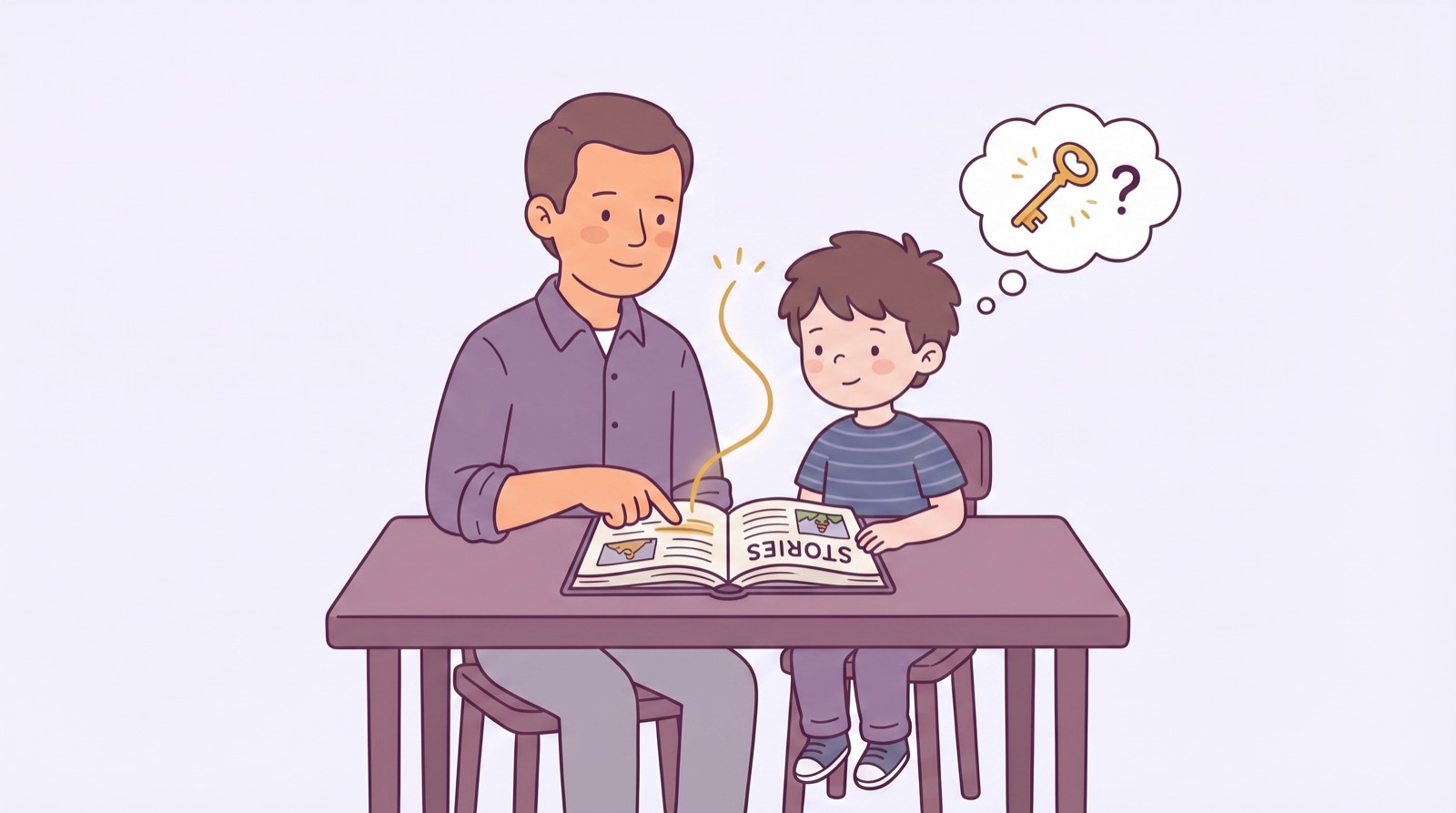
A lot of parents know this moment instantly.
Their child looks at a word, glances at the picture, and says something that fits the story but is not actually what the page says. Or they look at the first letter, guess a word that seems close enough, and keep going.
That can be confusing, especially when the child seems bright, verbal, and able to understand the story overall. But guessing at words is usually not a sign of laziness or low intelligence. Most of the time, it means the child does not yet have a secure enough way to work through the word itself.
What does it mean when a child guesses at words?
Guessing usually means a child is trying to get around a decoding problem.
Instead of looking carefully at the letters and mapping them to sounds, they are relying on other clues: the picture, the context of the sentence, the first letter, or a word they already know that looks vaguely similar. That can make a child seem like they are reading, but it is a fragile strategy.
A child might read horse for house, puppy for dog, or from for for. In each case, they are not really identifying the word accurately. They are making a fast guess that feels easier than sounding it out.
Why do kids do this?
Usually because guessing is easier than decoding when the underlying skills are shaky.
To read a new word accurately, a child needs to hear the sounds in spoken language, connect those sounds to letters, and move through the word in order. That is hard for many struggling readers, especially children with dyslexia or weak phonemic awareness.
When those skills are not secure, the brain looks for shortcuts. Guessing is one of them.
There is also a second reason this happens: some children were actively taught habits that encourage guessing. They may have been prompted to use the picture, think about what would make sense, or look at the first letter and try a word that fits. That can feel helpful in the moment, but it does not build the kind of word-reading skill a child needs for long-term progress.
Why guessing blocks progress
Guessing can get a child through a page, but it does not teach them how words work.
Strong readers build a large bank of instantly recognized words through a process often called orthographic mapping. That happens when children connect the full spelling of a word to its pronunciation and meaning. To do that, they need accurate attention to the letters and sounds inside the word.
Guessing interrupts that process. If a child keeps substituting words based on pictures or context, their brain is not getting the clean input it needs to store the word correctly. The word stays unfamiliar, so the same problem shows up again the next time.
This is one reason guessing becomes such a trap. It feels like forward movement, but it often keeps real word learning from happening.
When guessing is a bigger red flag
Some guessing is common in very early reading, especially before a child has solid alphabet knowledge.
But it becomes more concerning when it keeps happening over time, or when it shows up with other signs like:
- trouble sounding out simple words
- weak spelling
- skipping little words
- reading that is fast but inaccurate
- frustration, avoidance, or fatigue
- strong oral language with much weaker reading
That pattern can point to missing decoding skills, and sometimes to dyslexia or another language-based reading difficulty.
What not to do when your child guesses
A lot of adults naturally respond by saying things like:
- “What would make sense there?”
- “Look at the picture.”
- “Take a guess.”
The problem is that those prompts pull the child farther away from the letters.
Context matters for comprehension, but it is not a strong way to identify an unknown word. A better response is usually one that brings the child back to print.
It also helps not to jump in too fast with the answer. If you supply the word immediately every time, the child does not get a chance to practice a better strategy.
What to do instead
The best response is usually simple, calm, and specific.
Try one of these:
- “Keep your eyes on the letters.”
- “What is the first sound?”
- “Let’s go sound by sound.”
- “Try the whole word, not just the first letter.”
If the word is long, help the child break it into smaller parts instead of asking for a full guess.
If pictures are pulling too much attention, cover them for a moment while the child reads the line. Some parents also find it helpful to isolate the word with a finger or card so the child focuses on the print instead of the whole page.
What helps at home
You do not need to turn home reading into a formal lesson. Usually what helps most is a short, repeatable routine that keeps the child anchored to letters and sounds.
That might look like:
- a few minutes of phonemic awareness games
- short decodable reading practice
- helping your child sound out one hard word instead of guessing it
- spelling practice that links sounds to letters
If you want a clearer picture of what this kind of instruction looks like, our Science page, structured literacy guide, and linguistic phonics guide are good next reads.
A myth worth clearing up
Some people hear a child guess a word that fits the sentence and think that means the child is using an advanced reading strategy.
It usually means the opposite.
Skilled readers do use context, but mostly to help with meaning after they have identified the word. They do not rely on context as their main method for figuring out what the word says.
That difference matters a lot.
A better way to think about it
If your child guesses words, the important question is not, “Why are they being careless?”
It is, “What skill are they missing that makes guessing feel easier than decoding?”
That question leads to better help.
For many struggling readers, progress begins when reading stops being a game of approximations and starts feeling like something they can actually work through. And for older kids especially, that support works best when it comes in material that respects their age instead of making them feel babyish while they practice.
Quick FAQ
Common questions parents ask
Is guessing words a sign of dyslexia?
It can be a red flag, especially when it happens alongside weak sounding out, poor spelling, slow reading, or frustration. It does not prove dyslexia on its own, but it is worth paying attention to.
Should I tell my child to use context clues to figure out the word?
Context can help with meaning after a word is read, but it is not a reliable way to identify the word itself. If a child is stuck, it is usually better to bring their attention back to the letters and sounds.
What should I say when my child guesses?
Try something simple and calm, like: 'Keep your eyes on the letters. What is the first sound?' The goal is to redirect them back to decoding without turning the moment into a fight.
Want help at home that actually teaches decoding?
Fonemio gives struggling readers age-respectful comics, in-the-moment decoding support, and evidence-based reading practice.
Start 14-Day Free Trial