Phonics
What Is Linguistic Phonics? A Parent-Friendly Guide
Linguistic phonics is a speech-to-print approach that helps kids connect sounds to spellings so they can read and spell more confidently.
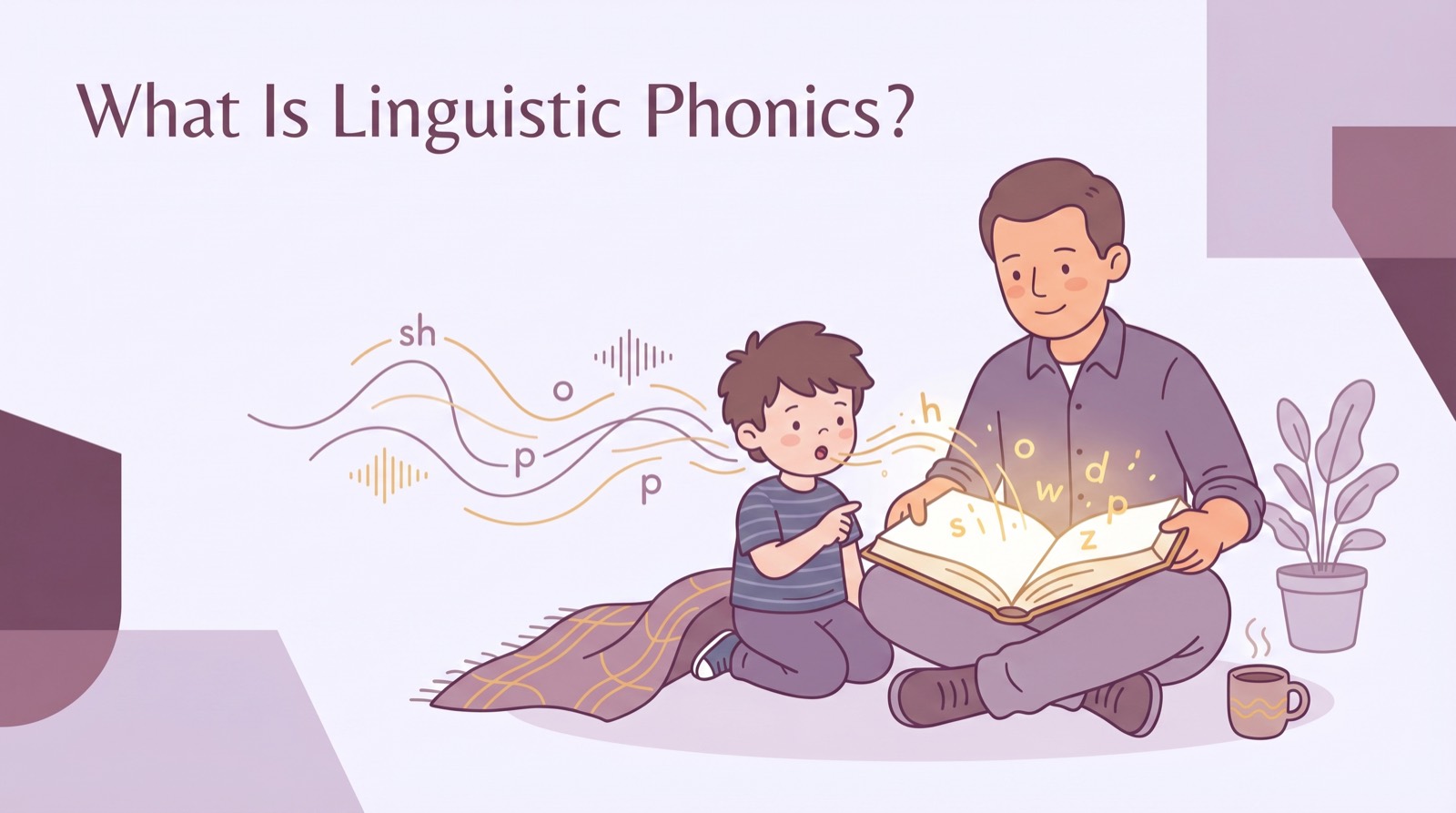
When a child struggles to read, the most important question is not which literacy term sounds best. It is whether the child is getting clear, explicit help with how words actually work.
Linguistic phonics, also called speech-to-print, starts with the sounds in spoken words and teaches children how those sounds map to letters and spellings. For many struggling readers, that makes reading feel less like memorizing and more like figuring words out.
We chose a speech-to-print approach because it teaches kids how to work through words from sound to spelling, instead of treating reading like something they have to memorize or guess.
What is linguistic phonics?
Linguistic phonics is a phonics approach that starts with spoken language. Instead of beginning with letters as abstract symbols, it begins with the sounds in words. Children learn to notice the sounds they hear, connect those sounds to letters or letter groups, and then use that knowledge to decode words when reading and encode words when spelling.
That is why you will sometimes hear it described as a speech-to-print approach. A simple way to think about it is this:
- hear the sounds in a word
- connect those sounds to spellings
- use the same knowledge to read and to write
Why does speech-to-print matter?
Speech-to-print matters because it gives children a simple mental model: words are made of sounds, and those sounds are represented in print.
For struggling readers, that can be a big shift. Reading stops feeling like a pile of words to memorize and starts feeling like something they can work through. Instead of guessing, they learn to listen, map, and decode.
How is linguistic phonics different from other phonics approaches?
Linguistic phonics shares a lot with other strong phonics approaches. It is explicit, systematic, and focused on the alphabetic code.
The difference is mostly the direction of instruction. Speech-to-print starts with the sounds in spoken words and then teaches the spellings that represent them. That means reading and spelling are taught as two sides of the same code, rather than as separate tasks.
That can look like:
- listening for the /ay/ sound
- learning that it might be spelled ay, ai, or a-e
- reading and spelling words that use those patterns
So instead of treating reading and spelling as separate jobs, it tends to connect them more tightly.
What does it look like in practice?
In a good linguistic phonics lesson, a child is not just staring at a page of words. They might:
- stretch a spoken word into individual sounds
- map each sound to a spelling
- build or write the word
- read it back
- compare words with the same sound but different spellings
For example, a child might say stamp, break it into sounds, write each part, then read the whole word back.
That back-and-forth matters. It reinforces that reading and spelling are connected, not separate skills living in separate boxes.
Why Fonemio chose a speech-to-print approach
We did not choose this approach because it sounded trendy. We chose it because it gives struggling readers a clear way into words.
In Fonemio, when a child gets stuck, they do not get pushed to guess. They tap the word and break it down. Early readers work sound by sound. More advanced readers move into syllables and morphology. The goal is not to hide the code. It is to make the code visible.
Is linguistic phonics research-based?
Yes. The strongest reading research supports explicit, systematic instruction in the alphabetic code: helping children connect speech sounds to letters, decode words, analyze word parts, and apply that knowledge in reading and writing. Speech-to-print fits squarely within that evidence-backed world.
The important nuance is that the research base is stronger for systematic phonics overall than for every specific branded program or label. So the strongest claim is not that speech-to-print is the only good method. It is that speech-to-print is a clear, code-focused way of delivering the kind of instruction research consistently supports.
At the same time, our choice was not only theoretical. In our own experience working with kids who struggle with reading, including children with dyslexia, speech-to-print has often led to clearer breakthroughs than more traditional approaches because it gives kids a more direct way to work through words instead of guessing or freezing.
Who can benefit from linguistic phonics?
This kind of instruction can make sense for:
- beginning readers who are learning how the code works
- kids who struggle to sound out words
- children who guess from pictures or context instead of decoding
- kids whose spelling shows weak sound awareness
- older struggling readers who still have unfinished decoding skills
That last group is easy to overlook. Some older children do not need more exposure to books in general. They need cleaner support with the code, but in a format that does not feel babyish.
What can parents do at home?
You do not need to turn home into school. Usually the most helpful routines are short, calm, and repeatable.
A few examples:
1. Sound play
Play simple games with sounds. You can clap syllables, notice first and last sounds, or stretch a short word out like robot talk and blend it back together.
2. Read-the-word practice
When your child gets stuck, go sound by sound from left to right, then blend. A simple prompt is:
“Let’s go sound by sound. What’s the first sound? Now the next one. Now slide them together.”
3. Spell-to-read practice
Say a word slowly, listen for each sound, write the spellings, then read it back. That helps many children because spelling can make the code more visible.
What should parents avoid?
A few things tend to backfire:
- rushing a child through sound work before it feels solid
- relying too heavily on memorizing whole words visually
- treating guessing from pictures as the same thing as reading
- turning every practice moment into a test
It also helps to focus on sounds first during sound-based practice instead of bouncing back and forth between letter names and sounds too quickly.
Is linguistic phonics the same as structured literacy?
Not exactly, but they are closely related. Structured literacy is the broader umbrella for explicit, systematic teaching of the building blocks of reading and spelling.
Speech-to-print is the instructional direction we chose within that umbrella. It organizes instruction from sound to spelling and keeps decoding and spelling closely linked.
A good parent takeaway
If the term linguistic phonics sounds overly technical, you can mostly translate it into a simpler question:
Is my child getting clear, systematic help with the sounds in words and how those sounds map to print?
That is the heart of it. For many struggling readers, progress begins when reading stops feeling like guesswork and starts feeling like something they can actually crack.
That is why the method matters. But so does the format. Older kids with decoding gaps do not need babyish books. They need clear code-based support in stories that still feel age-appropriate and worth reading.
Quick FAQ
Common questions parents ask
Is linguistic phonics the same as synthetic phonics?
They overlap a lot, but they are not exactly the same. Linguistic phonics is usually organized more from sound to spelling, while synthetic phonics is often described more from letters to sounds and blending.
Does linguistic phonics help with spelling too?
Yes. One of its big strengths is that it connects reading and spelling, so children use the same sound-spelling knowledge in both directions.
Who can benefit from linguistic phonics?
It can help beginning readers, children who struggle to sound out words, kids who rely on guessing, and older struggling readers who still need cleaner decoding support.
Want help at home that actually teaches decoding?
Fonemio gives struggling readers age-respectful comics, in-the-moment decoding support, and evidence-based reading practice.
Start 14-Day Free Trial