Science of Reading
What Is Structured Literacy? A Guide for Parents of Struggling Readers
What is structured literacy? Learn how this explicit, step-by-step approach helps struggling readers, supports dyslexia intervention, and teaches kids to decode instead of guess.
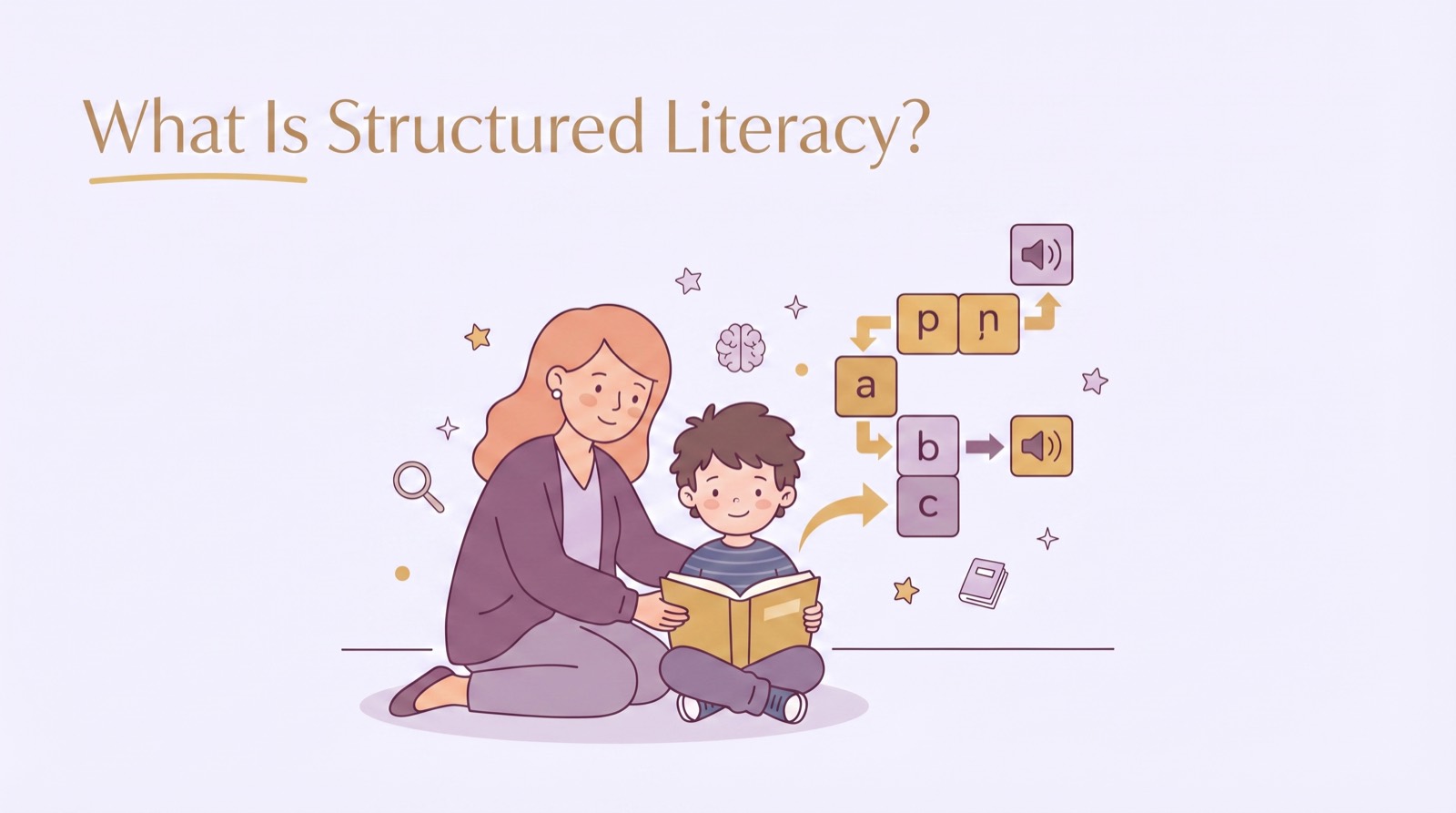
If your child is struggling with reading, you have probably heard terms like structured literacy, Science of Reading, phonics, and maybe even balanced literacy.
It is a lot. Most parents do not need one more pile of jargon. They need a clearer answer to a simpler question: what actually helps a child learn to read?
Structured literacy is one of the clearest answers we have. It is an explicit, systematic way of teaching children how spoken language maps to print, so they can decode words instead of guessing them.
What structured literacy actually means
Structured literacy is not a single program. It is a way of teaching reading that is explicit, sequential, cumulative, and responsive to the child.
In plain English, that means skills are taught directly, in a clear order, with regular review. A teacher does not assume a child will just pick up how reading works through exposure or context clues.
Instead, children are taught the building blocks of reading step by step, including:
- hearing and working with sounds in spoken words
- connecting sounds to letters and letter patterns
- blending sounds to read words
- breaking longer words into syllables and meaningful parts
- building spelling, fluency, vocabulary, and comprehension over time
This matters because reading is not a natural process in the way speech is. Children do not learn to read just by being surrounded by print. Their brains have to build new connections between what they see, what they hear, and what they know about language.
Is structured literacy just phonics?
No, but phonics is a big part of it.
A lot of people use the terms as if they mean the same thing. They do not. Phonics teaches the relationship between letters and sounds. Structured literacy is broader. It also includes phonemic awareness, spelling patterns, syllables, morphology (prefixes, suffixes, roots), syntax, and meaning.
That broader view matters because strong reading is not only about sounding out short words. It is also about understanding how longer words are built, why spelling patterns work the way they do, and how decoding supports comprehension.
Why this matters so much for struggling readers
Many parents can tell something is off before they know what to call it.
Their child may be bright, funny, curious, and verbally strong, but reading still becomes a daily snag. They skip words, guess from the picture, freeze on unfamiliar words, or seem to fall apart the moment the text gets harder.
That does not mean they are lazy. It usually means reading is not yet secure enough to feel automatic.
Structured literacy matters because it gives struggling readers a more reliable path in. Instead of leaning on guessing, memorizing, or vague encouragement, it teaches them how words actually work.
For children with dyslexia, this kind of direct instruction is especially important. They often need clearer, more systematic teaching in phonological processing and decoding than less explicit approaches provide.
Structured literacy vs. guessing strategies
One of the biggest shifts in reading instruction has been moving away from methods that encourage children to figure out words from pictures, context, or the first letter.
That can look supportive in the moment. It may even help a child get through a page. But it does not build secure word reading.
Skilled readers do not identify most words by guessing. They process the letters in the word quickly and connect them to speech and meaning. Struggling readers need more help getting to that point, not more practice working around the print.
That is one reason structured literacy has gained so much attention. It aligns much more closely with what reading research says children need, especially when decoding is hard.
What structured literacy often looks like in practice
A structured literacy approach usually includes:
- direct teaching of sound-letter correspondences
- a clear scope and sequence, from simpler patterns to more complex ones
- review that builds on previously taught material
- reading practice with words and texts a child can actually decode
- spelling and writing that reinforce the same patterns being taught
- ongoing check-ins so instruction can adjust when a child is stuck
For older kids, this should still be age-respectful. The instruction may include more work with syllables, prefixes, suffixes, roots, and academic vocabulary, not just early phonics patterns.
What to look for in a structured literacy program
If you are evaluating a reading program, tutor, or at-home tool, a few green flags matter:
- it teaches decoding directly
- it follows a clear sequence instead of jumping around
- it helps the child work through the letters in the word
- it avoids treating guessing as a main strategy
- it gives enough review for skills to stick
- it respects the child's age while still meeting their real decoding level
That last point matters a lot. Many older struggling readers are stuck with a painful tradeoff: text they can read feels too young, and text that feels age-appropriate is too hard to decode successfully.
Where Fonemio fits
Fonemio is built around that gap.
We use age-respectful comic stories to win attention, but the real value is what happens when a child gets stuck. Instead of defaulting to guessing or waiting for adult rescue, the child gets in-the-moment support that helps them sound out the word and keep reading.
That is the part we care about most. Motivation matters, but it works best when the reading support underneath is actually teaching something.
The bottom line
Structured literacy is not just another education buzzword. It is a practical, research-aligned way to teach reading more clearly.
For parents, the biggest takeaway is simple: if reading support does not teach your child how words work, it may not be solving the real problem. A better approach helps children decode, build confidence, and become more independent over time.
Quick FAQ
Common questions parents ask
Is structured literacy the same as phonics?
No. Phonics is one important part of structured literacy, but the full approach also includes phonemic awareness, spelling patterns, word parts, sentence structure, and language comprehension.
Why does structured literacy matter for dyslexia?
Children with dyslexia often need direct, systematic instruction in how sounds map to letters and patterns. Structured literacy is designed to provide that kind of support.
What should parents look for in a reading program?
Look for explicit decoding instruction, a clear sequence, regular review, support with spelling patterns and word parts, and an approach that avoids guessing strategies. Decodable practice and teaching that responds to the child's actual skill level are both good signs.
How is structured literacy different from balanced literacy?
Structured literacy teaches reading skills directly and in sequence. Balanced literacy often puts more weight on context, pictures, and cueing strategies. For struggling readers, especially those with dyslexia, that difference can matter a lot.
Want help at home that actually teaches decoding?
Fonemio gives struggling readers age-respectful comics, in-the-moment decoding support, and evidence-based reading practice.
Start 14-Day Free Trial