Reading Help
What Is High-Low Reading? Why Struggling Readers Need Books That Fit
High-low reading materials are high interest and easier to decode. Here is why age-respectful books matter for struggling readers.
A lot of parents run into the same impossible shelf problem.
The books their child can read independently feel too young. The books their child actually wants to read are too hard. So reading time turns into a choice between embarrassment and frustration.
That is the problem high-low reading is meant to solve.
High-low usually means high interest, low reading difficulty. In plain parent language, it means the story, topic, and design respect the child's age and interests, while the words are still manageable enough for the child to read with success.
For struggling readers, that match matters more than many adults realize. A child may need simpler decoding demands without needing babyish content. Those two things are not the same.
Reading level and maturity level are different
When a child struggles to read, adults often reach for easier books. That makes sense on the surface. If the text is too hard, lower the level.
But easier can accidentally become humiliating.
An eight-year-old who loves spooky stories, science facts, soccer stats, or graphic novels may not want a book that looks like it was made for a much younger child. A ten-year-old who is still working on basic decoding may be capable of sophisticated jokes, big feelings, and complex ideas, even if the print on the page is still hard.
That mismatch can create a quiet kind of damage. The child is not only struggling with the words. They are also receiving the message that reading is where they have to go backward.
High-low reading starts with a better assumption: a child's decoding level does not define their intelligence, taste, or maturity.
Why older struggling readers often reject the “right level” book
Parents and teachers usually mean well when they offer a book at a child's independent reading level. The problem is that children notice much more than the words.
They notice the cover. They notice the illustrations. They notice whether the humor feels young. They notice whether classmates would laugh if they saw the book in a backpack.
For a child who already feels behind, that social meaning matters. If the book looks babyish, the child may refuse it before anyone gets to the reading practice part.
That refusal can look like laziness or attitude from the outside. Sometimes it is really self-protection. The child is trying to avoid another moment where reading makes them feel exposed.
High-low books help because they lower the reading demand without lowering the child's dignity.
High interest is not a reward. It is part of the work.
It is tempting to treat engaging books as a nice bonus, something to add after the “real” reading work is done. But for struggling readers, interest often determines whether practice happens at all.
A child who avoids reading will not get enough repetitions to become more automatic. A child who only reads under pressure may practice, but with so much stress that the whole routine becomes brittle. One bad night can turn into a week of resistance.
Interest gives reading a reason.
That does not mean every book needs explosions, jokes, dragons, or cliffhangers. It means the material should offer some real payoff for the child: curiosity, suspense, humor, identity, useful information, a character they care about, or a format that feels doable.
When the content pulls a child forward, parents do not have to do all the pulling.
Low difficulty should still mean real reading
The “low” part of high-low can be misunderstood.
It should not mean watered down, empty, or dependent on guessing. It should mean the text has been controlled enough that the child can actually read the words, not just survive the page.
For a child with weak decoding, this distinction matters. A book can look easy because it has short sentences, lots of pictures, or a repeated pattern, but still contain words the child cannot sound out. In that case, the child may lean on memory, pictures, context, or a lucky first-letter guess.
That is not the same as building stronger word reading.
A good high-low fit should let the child practice attending to the print. The words should be close enough to their current decoding knowledge that they can work through most of them with support. There may still be some tricky words, but the whole page should not depend on rescue.
The goal is not to make reading effortless. The goal is to make it possible enough that effort turns into progress.
What good high-low material looks like
Strong high-low reading material usually balances two jobs.
First, it respects the reader's age and interests. The topic, art style, pacing, humor, and emotional world should not feel like a step backward. Older children especially need books that let them feel like themselves, not like a much younger version of themselves.
Second, it controls the reading load. That might mean shorter chunks of text, more familiar spelling patterns, careful vocabulary choices, clearer layout, or repeated practice with specific word patterns.
Comics can be especially useful here when they are designed carefully. The format naturally breaks text into smaller pieces. The story can feel mature and fast-moving without requiring long walls of prose. Panels, expressions, and pacing can support engagement while the child still has to read the words.
But comics are not automatically high-low. A graphic novel can still be too hard to decode. A comic can still include vocabulary and spelling patterns that overwhelm a child. The format helps, but the word-reading fit still matters.
How parents can spot a better fit
You do not need a perfect formula to make better choices at home. Watch what happens when your child reads.
A better-fit book often leads to:
- fewer shutdowns before reading even starts
- less guessing from pictures or the first letter
- enough challenge that the child has to think, but not so much that every line collapses
- more willingness to try again after getting stuck
- better energy at the end of a short reading session
A poor fit often shows up quickly. Your child may refuse the book because it looks too young, or they may accept the topic but stumble through so many words that the story disappears. Either way, the book is not doing the job you need it to do.
One practical test is to ask: Is this text helping my child practice reading, or is it mostly helping them avoid the hard part?
If the book keeps dignity high and decoding demand manageable, you are much closer to the right zone.
High-low does not mean staying low forever
Some parents worry that easier books will hold a child back. That worry is understandable, especially when everyone is eager for the child to catch up.
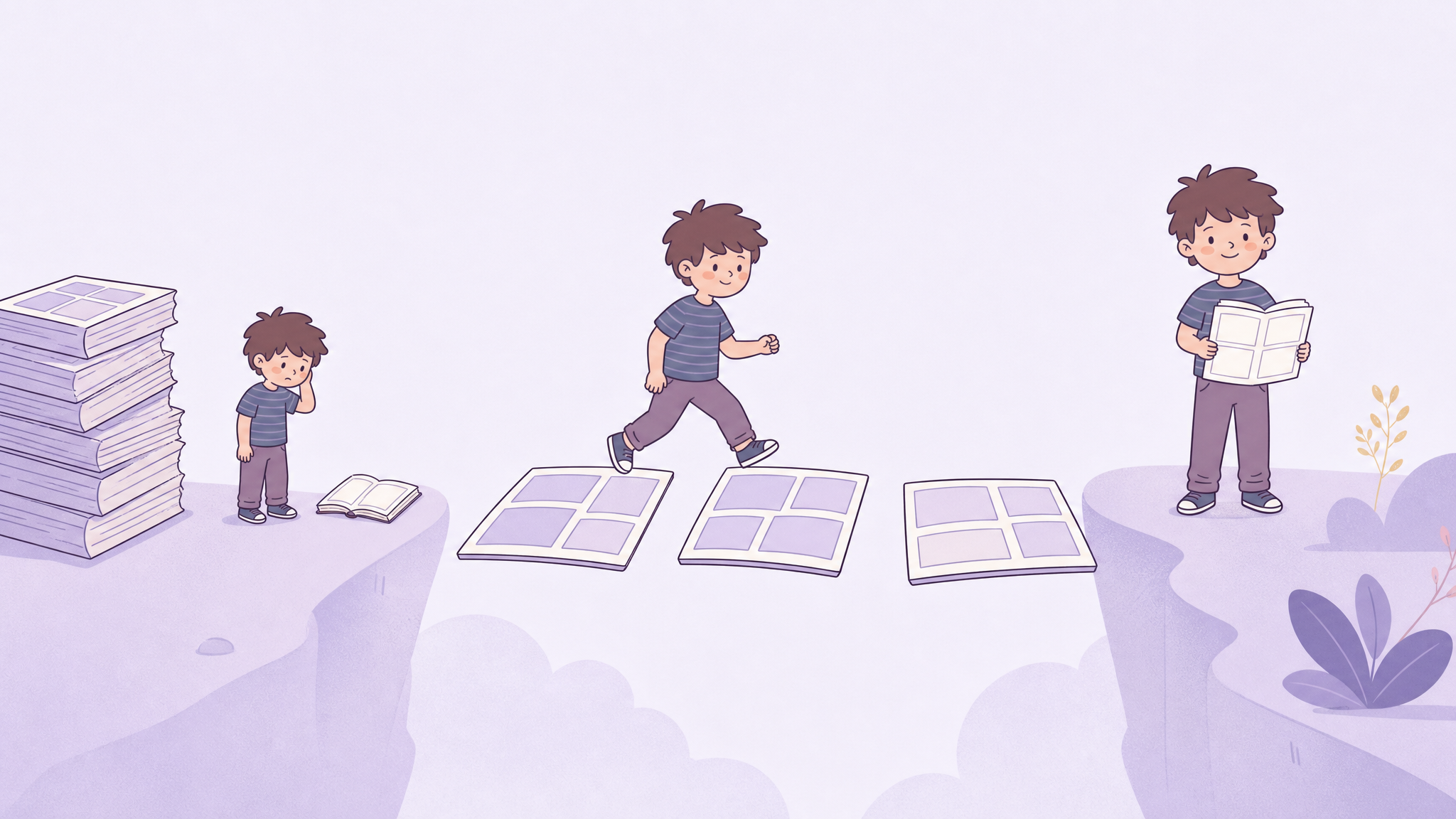
But a well-matched high-low book is not a ceiling. It is a bridge.
The purpose is to create successful, repeatable practice at the child's current decoding level while keeping motivation alive. As decoding becomes more accurate and automatic, the text can become more demanding. The child should not be parked forever in easy material, but they also should not spend every reading session drowning in text that is too hard.
Progress usually needs both: enough support to succeed today, and enough stretch to grow tomorrow.
Where Fonemio fits
This is one reason Fonemio is built around age-respectful comics matched to a child's actual decoding level.
The comic format helps solve the interest problem. Kids get characters, scenes, suspense, and a reason to keep going. The decoding-level match solves the practice problem, because the child is not just looking at cool stories; they are reading text that is designed to be within reach.
Then, when a child gets stuck, the support is built into the reading moment. Instead of guessing, freezing, or waiting for an adult to rescue the word, the child can get help that brings attention back to sounds and spellings.
That combination matters. Engagement gets the child to the page. Decoding support helps them move through it. Repetition builds the path forward.
The bottom line
High-low reading is not about lowering expectations. It is about choosing material that matches the whole child.
A struggling reader may need text that is easier to decode, but they still deserve stories that respect their age, intelligence, and interests. When those pieces line up, reading practice can feel less like a punishment and more like something a child can actually do.
And for many families, that is the first real shift: not a perfect reading session, just one where the child starts, gets support, and finishes with a little more confidence than they had before.
Quick FAQ
Common questions parents ask
What does high-low reading mean?
High-low usually means high interest and lower reading difficulty. The goal is to give struggling readers material that feels age-respectful while still being readable enough for real practice.
Is high-low reading only for older kids?
No. High-low materials can help any child whose interests are ahead of their independent reading level, but they are especially important for older struggling readers who may reject books that feel too young.
Are comics good high-low reading materials?
They can be. Comics can offer mature storylines, visual support, and shorter text chunks, but the words still need to match the child's decoding level if the goal is independent reading practice.
Want help at home that actually teaches decoding?
Fonemio gives struggling readers age-respectful comics, in-the-moment decoding support, and evidence-based reading practice.
Start 14-Day Free Trial