Parent Support
My Child Hates Reading: 6 Real Reasons It Feels So Hard
When a child says they hate reading, it is usually a sign that something underneath reading feels hard, exhausting, embarrassing, or hopeless. Here are six common reasons why.
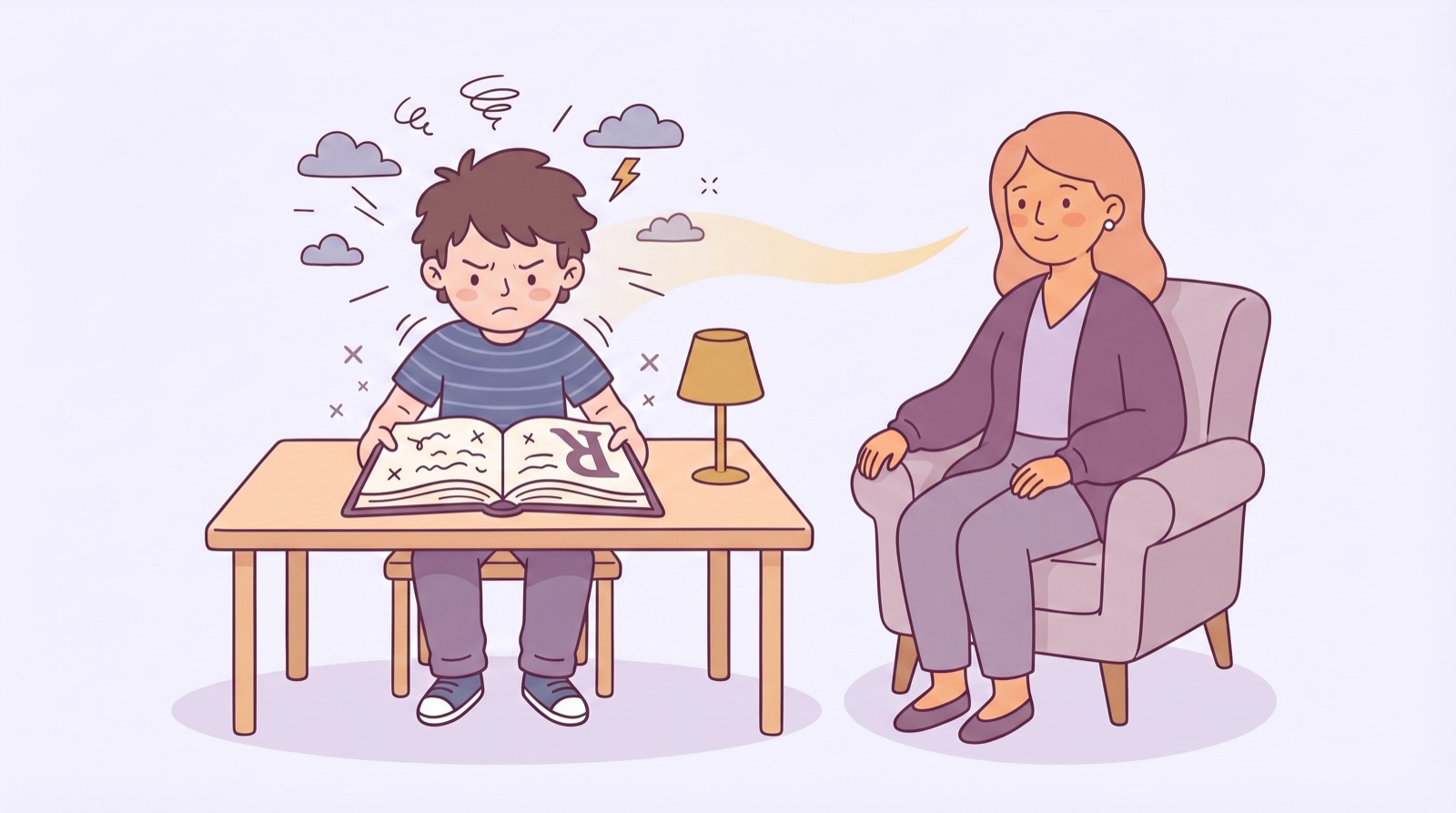
When a child says they hate reading, parents often get handed the same unhelpful explanations.
Maybe they are lazy. Maybe they are not trying. Maybe they just need more discipline, more practice, or fewer screens.
Sometimes those explanations are tempting because they make the problem sound simple.
But in real life, children usually do not hate reading for no reason.
More often, they hate what reading has come to feel like.
It may feel confusing. Slow. Embarrassing. Draining. Babyish. Pointless. Or like one more place where they are expected to fail in public.
That is why the most useful question is usually not, “How do I make my child try harder?”
It is, “What is making reading feel so bad?”
Here are six real reasons reading resistance shows up, and what parents can do with each one.
1. Reading is still too hard at the word level
For many kids, the biggest problem is still decoding.
They may not be hearing the sounds in words clearly enough, connecting sounds to letters automatically enough, or blending those sounds into words smoothly enough. Some guess from pictures or the first letter. Others try to memorize whole words and then hit a wall when the number of words gets too big.
From the outside, that can look like refusal. But if every sentence feels like an obstacle course, avoidance makes sense.
This is especially common in children with dyslexia or other word-reading difficulties.
What parents may notice:
- guessing instead of sounding out
- inconsistent reading of the same word
- skipping endings like -s or -ed
- strong spoken language with much weaker reading
- frustration around even simple text
What helps:
- explicit decoding support, not just more pressure to read
- short practice with words the child can actually work through
- less guessing, more attention to sounds and letters
- structured literacy support when decoding problems are persistent
2. Reading is so effortful that comprehension falls apart
Some children can technically read the words, but it takes so much effort that they have almost nothing left for meaning.
They get to the end of the paragraph and have no idea what they just read.
This often happens when fluency is weak. If word reading is slow, choppy, and effortful, working memory gets overloaded. The child is using so much energy on the mechanics that comprehension collapses.
That is exhausting, and children feel that exhaustion long before they can explain it.
What parents may notice:
- robotic or painfully slow reading
- losing their place on the page
- rereading the same line
- finishing a passage but remembering almost nothing
- visible fatigue after a short reading session
What helps:
- shorter reading chunks
- reading with support instead of insisting on independence too early
- pre-teaching a few hard words before starting
- guided rereading once accuracy is in place
3. They can read the words, but meaning is still not coming together
Some children sound fine when they read aloud, but they do not really understand what they are reading.
This can be especially confusing for adults, because it looks like the child is reading well. But word calling and comprehension are not the same thing.
A child may decode accurately and still struggle with vocabulary, sentence meaning, inference, background knowledge, or keeping track of what is happening across a longer passage.
When that happens, reading starts to feel empty and frustrating. They are doing all this work without getting much back from it.
What parents may notice:
- fluent oral reading with weak retelling
- vague or off-base answers about the text
- trouble understanding figurative language or implied meaning
- stronger performance when listening than when reading alone
What helps:
- checking for understanding more often
- building background knowledge before reading
- talking through the text instead of treating reading as a solo test
- supporting vocabulary and meaning, not just accuracy
4. Attention and executive function are getting in the way
Some children are not mainly blocked by decoding or comprehension. They are blocked by the executive-function demands around reading.
Reading asks a child to start a task they may already dread, stay focused, manage distractions, hold ideas in mind, monitor mistakes, and keep going when the text gets harder.
That is a lot.
For kids with ADHD or executive-function weaknesses, reading may feel impossible to organize and sustain, even when the underlying reading skill is better than adults realize.
What parents may notice:
- racing through text and missing small words
- staring at the page but not really engaging
- getting derailed by every distraction
- putting off reading homework until the last minute
- seeming capable one day and completely scattered the next
What helps:
- breaking reading into smaller chunks
- using a finger, card, or guide to keep place on the page
- making the task active with simple notes, highlights, or stop points
- reducing the load around the reading task, not just repeating reminders
5. Reading has become tied to shame, stress, or failure
Sometimes the deepest reason a child hates reading is emotional.
If reading has been a place where they feel behind, exposed, corrected, rushed, or compared, it can start to trigger anxiety before the book is even open.
That is when reading stops being just an academic task. It starts feeling like a threat.
Children may not say, “I am avoiding reading because it makes me feel ashamed.” They are more likely to say, “I hate this,” “This is stupid,” or “I’m not doing it.” Some melt down. Some go blank. Some get silly. Some complain of headaches or stomachaches.
Underneath all of that, there is often a child trying to escape a situation that feels awful.
What parents may notice:
- big emotions right before reading homework
- shutdown, anger, or avoidance around books
- stomachaches or tears tied to school reading
- saying things like “I’m stupid” or “I can’t do this”
- much more distress at home after holding it together at school
What helps:
- lowering the emotional temperature first
- validating the child’s experience instead of arguing with it
- separating reading difficulty from intelligence
- protecting dignity, especially for older kids
- making home feel safer than school, not like more of the same
6. The text is a bad match, and motivation is collapsing
Not every child who hates reading has a clinical reading disorder. Sometimes the issue is partly that reading has become all demand and no payoff.
The books feel too hard, too easy, too childish, too boring, or too disconnected from what the child actually cares about.
This matters more than adults sometimes realize.
A child who is asked to spend all their reading time in material that feels humiliating or irrelevant is not likely to build real motivation. And if they are already struggling, they may avoid reading even more, which makes the gap wider over time.
What parents may notice:
- “Books are boring” no matter what is offered
- refusal of assigned books but strong interest in comics, manuals, or audio stories
- willingness to engage when the topic finally feels relevant
- embarrassment when the reading level is too obviously young
What helps:
- high-interest material in any format that still respects the child’s age
- graphic novels, magazines, audiobooks, and read-alouds
- choosing texts that lower friction without lowering dignity
- remembering that rebuilding motivation sometimes starts before rebuilding stamina
So how do you know what is really going on?
Usually, you look for the pattern.
A child who hates reading because it is boring may still read easily when the topic is exciting or the reward is strong enough.
A child with a real reading bottleneck tends to struggle across settings, across texts, and across levels of motivation. They may work hard and still look stuck. They may take far longer than expected to finish reading homework. They may understand much more when someone reads to them than when they read alone.
That does not tell you everything, but it gives you a more honest starting point than calling the child lazy.
What to do next if reading has become a fight
If reading is turning into daily conflict, the answer is usually not to increase pressure.
A better first move is to reduce friction and get more specific.
Ask yourself:
- Is the main problem sounding out?
- Is the main problem fluency and fatigue?
- Is the child reading words but not understanding?
- Is attention the bigger issue?
- Has reading become emotionally loaded?
- Is the material a bad fit?
The more clearly you can answer that, the more helpful your support becomes.
In practical terms, that often means:
- shorter reading sessions
- more support during hard moments
- better text matching
- more explicit skill instruction
- fewer shame-based battles
- outside screening or intervention when the struggle is persistent
The bigger picture
A child who hates reading is often not rejecting literacy itself.
They are rejecting confusion, exhaustion, embarrassment, or repeated failure.
That is why the goal is not to win a power struggle over books. The goal is to figure out what reading has come to mean for this child, then change that experience.
When the task gets more doable, more respectful, and more successful, resistance often starts to soften.
If you want a fuller picture of what evidence-based reading support looks like, our structured literacy guide, signs of dyslexia by age guide, and science page are good next reads.
Quick FAQ
Common questions parents ask
Is my child lazy if they avoid reading?
Usually not. Reading avoidance is often a response to something feeling too hard, too tiring, too embarrassing, or too confusing.
Can a child hate reading even if they are smart?
Absolutely. Many bright children hate reading because the act of reading itself feels effortful, while their thinking and spoken language may be much stronger.
What should I do first if reading always turns into a fight?
Start by lowering pressure. Shorter sessions, better-matched texts, reading together, and support with the actual sticking point usually help more than pushing harder.
Want help at home that actually teaches decoding?
Fonemio gives struggling readers age-respectful comics, in-the-moment decoding support, and evidence-based reading practice.
Start 14-Day Free Trial